Now Welcoming 3 Founding Clients — Limited Founding Rate
Low Maintenance Ground Covers That Actually Work
Low-Maintenance Options for Sun, Shade & What to Avoid
Ground covers can reduce weeding, retain moisture, and visually unify a space — but only if they’re chosen wisely.
Some popular options are marketed as “low maintenance” but quietly create long-term problems.
Here’s what actually works — and what doesn’t.

Ground Covers Should Make Gardens Feel Fuller — Not More Complicated
The best ground covers do more than spread. They soften edges, reduce maintenance, connect planting areas, and help gardens feel calmer and more complete over time.
Why Ground Covers Matter In Low Maintenance Gardening
Layered planting helps gardens feel softer, fuller, and easier to maintain over time.

Ground covers help reduce bare soil, suppress weeds, soften transitions, and create a more finished garden with less upkeep over time.
They are one of the simplest ways to make gardens feel fuller while reducing maintenance long-term.
Ground covers help connect taller perennials and shrubs so gardens feel more cohesive across the seasons.
What’s Included in a Garden Plan

A custom garden plan helps simplify plant decisions while creating a garden that becomes fuller and easier to maintain over time.
Each Plan Includes:
Personalized plant recommendations
Layout suggestions for your space
Sun and shade planning
Bloom timing guidance
Layered planting combinations
Low-maintenance structure recommendations
Why Ground Covers Matter In Low Maintenance Gardening
Ground covers help reduce bare soil, suppress weeds, soften transitions, and create a more finished garden with less upkeep over time.
They are one of the simplest ways to make gardens feel fuller while reducing maintenance long-term.
Ground covers help connect taller perennials and shrubs so gardens feel more cohesive across the seasons.
How Ground Covers Are Used
Instead of lawn or bare soil, ground covers can be planted densely to form a living carpet. Nature hates a vacuum so any space left open will eventually be filled with weeds. That means regular weeding, mowing or spraying to maintain the area. Ground covers are a solution that removes or reduces the extra work.
Covering a Large Area for Lower Maintenance

Benefits:
Reduces open soil (which means fewer weeds)
Requires little or now mowing depending on the plant
Retains moisture
Softens the landscape visually
Brings biodiversity and pollinators to your garden
Improves soil health
This approach works best when:
You want to reduce lawn space
The area gets consistent water (naturally or with irrigation)
You’re willing to let plants knit together naturally over time
This is ideal for slopes, wide borders, or hard-to-mow areas.
As a Living Base Around Larger Plants

Ground covers shine when used beneath shrubs and taller perennials.
Instead of leaving mulch exposed long-term, a low-growing plant can fill in around the base.
Why this works:
Prevents weeds from establishing
Keeps soil shaded and cool
Creates a layered, professional look
Add biodiversity to your garden
Compliments the look of your larger plants
This is one of the most overlooked low-maintenance strategies.
When properly spaced, ground covers will eventually replace most visible mulch.
As a Weed Barrier Around Vegetables

Ground covers can also function as living mulch in vegetable gardens.
They are especially useful:
Between raised beds
Along pathways
Around perennial vegetables or herbs
Why this works:
Suppresses weeds
Reduces mud and soil splash
Helps retain moisture
Supports pollinators
However, this works best when:
The ground cover is shallow-rooted
It doesn’t aggressively compete with vegetables
You maintain clear planting pockets for annual crops
Creeping thyme and low sedums can work well in paths, while organic mulch is often better directly around heavy-feeding vegetables.
Sun Ground Covers
Sunny areas offer some of the toughest, most resilient ground cover options — but only if you choose plants that can truly handle heat and exposure. The right sun-loving ground cover will suppress weeds, tolerate drought, and reduce maintenance in open beds, slopes, and high-light spaces. These plants thrive in full sun (6+ hours daily) and handle summer heat well once established.
Creeping Thyme (Thymus serpyllum)
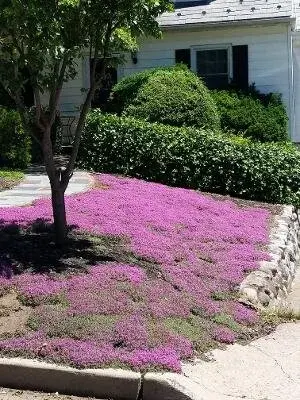
Creeping Thyme is a classic ground cover and likely the first thing that comes to mind for many gardeners. It is a classic for a reason. It thrives in rocky soil making it adaptable to many difficult spots including pathways that would otherwise require regular weeding.
Why It Works:
Drought tolerant once established
Suppresses weeds
Handles light foot traffic
Attracts pollinators
Where it Fails:
Poor drainage
Heavy clay without amendment
Very high traffic areas
Creeping Phlox (Phlox subulata)

Creeping phlox is one of the most dramatic spring-blooming ground covers you can plant. In early to mid-spring, it creates a dense carpet of color that blankets slopes, borders, and rock gardens with minimal long-term maintenance.
Why It Works
Strong erosion control
Low maintenance once established
Beautiful spring color
Where It Fails
Full shade
Overly rich, wet soil
Blue Star Creeper (Isotoma fluviatilis)

Blue star creeper is a delicate-looking but surprisingly durable ground cover that forms a dense, low-growing mat. Its tiny star-shaped blue flowers add a soft, airy feel to pathways and garden edges while helping suppress weeds once established.
Why It Works
Forms a dense, low mat
Tiny blue flowers in late spring/summer
Handles light foot traffic
Softens stone paths beautifully
Where It Fails
Needs consistent moisture to establish
Can thin in extreme heat without irrigation
Best for between stepping stones or as a soft lawn alternative in moderate sun.
Ice Plant (Delosperma)

Ice plant is a heat-loving, drought-tolerant ground cover known for its vibrant, daisy-like blooms and succulent foliage. It thrives in hot, sunny conditions where many other plants struggle, making it an excellent choice for slopes, rock gardens, and dry landscapes.
Why It Works
Extremely drought tolerant
Thrives in poor soil
Brilliant, long-lasting blooms
Excellent for slopes
Where It Fails
Heavy clay or wet winter soil
Areas with prolonged shade
Best for hot, dry spots and erosion control.
Dwarf Mondo Grass
(Ophiopogon japonicus ‘Nana’)

Dwarf mondo grass is a low-growing, grass-like ground cover that creates a clean, structured look in garden beds. Its tidy, evergreen clumps slowly knit together over time, forming a soft carpet that works beautifully along borders and between pavers.
Why It Works
Clean, structured look
Evergreen in mild climates
Suppresses weeds once established
Works in part sun to light shade
Where It Fails
Slow to fill in
Needs consistent moisture initially
Best for modern beds and edging with a tidy aesthetic.
Snow-in-Summer (Cerastium tomentosum)
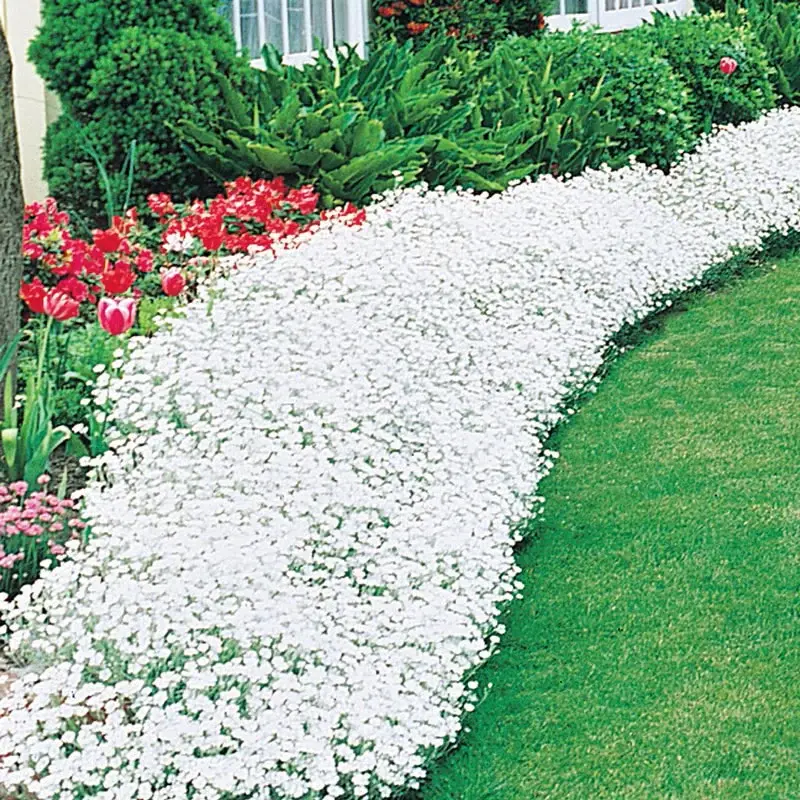
Snow-in-Summer is a bright, sun-loving ground cover known for its silvery foliage and abundant white blooms in late spring. It spreads quickly in dry, well-drained soil, creating a soft, reflective carpet that thrives in hot, sunny locations.
Why It Works
Silvery foliage reflects heat
Excellent drought tolerance
Beautiful white blooms in late spring
Where It Fails
Humid, wet climates
Rich soil (can get floppy)
Best for slopes and bright, dry areas.
Design Tip for Sun Beds
In sunny beds, prioritize drought-tolerant ground covers that can handle reflected heat from stone, siding, or pathways. Plants that thrive in lean soil and full sun will outperform moisture-loving varieties long term.
Layering is key: use a ground cover beneath shrubs or perennials so exposed mulch gradually disappears. The more living coverage you have, the fewer weeds you’ll manage later.
Shade Ground Covers
Shade doesn’t mean boring — but it does require intentional plant selection. The right ground cover can brighten dark areas, suppress weeds, and reduce long-term maintenance under trees and along north-facing beds. These plants thrive in full or part shade (0-4 hours of sun daily).
Sweet Woodruff (Galium odoratum)

Sweet woodruff forms a soft, airy carpet of bright green foliage topped with delicate white flowers in spring. It thrives in consistent shade and slowly spreads into a dense, weed-suppressing layer.
Why It Works
Excellent for dry shade under trees
Forms a cohesive ground layer
Deer resistant
Low maintenance once established
Where It Fails
Hot, full sun
Extremely dry soil without initial watering
Ajuga (Bugleweed)

Bugleweed is a fast-spreading ground cover known for its rich foliage colors (many varietes available) and upright blue flower spikes in spring. It fills in quickly, making it ideal for suppressing weeds in larger shaded beds.
Why It Works
Spreads rapidly
Evergreen in mild climates
Tolerates part shade to full shade
Strong weed suppression
Where It Fails
Very dry shade
Poor drainage
Foamflower (Tiarella cordifolia)

Foamflower is a woodland native that offers textured foliage and airy white flower spikes in spring. It spreads gently without becoming aggressive, making it a refined option for layered shade gardens.
Why It Works
Native woodland aesthetic
Not invasive
Handles dry shade better than many options
Adds vertical texture in bloom
Where It Fails
Full, intense sun
Heavy clay without amendment
Lamium (Dead Nettle)

Lamium brightens shaded areas with silver-patterned foliage and soft pink or purple blooms. It spreads steadily and creates a luminous look in darker corners.
Why It Works
Tolerates dry shade
Reflective foliage brightens dark beds
Fast establishment
Handles part shade beautifully
Where It Fails
Full, hot sun
Overly wet soil
European Ginger (Asarum europaeum)

European ginger forms a dense mat of glossy, deep green leaves that stay attractive all season. It’s slower to spread, but creates one of the most polished, weed-resistant shade carpets available.
Why It Works
Dense, weed-suppressing foliage
Elegant evergreen appearance
Thrives in deep shade
Non-aggressive spread
Where It Fails
Dry soil without amendment
Areas needing quick coverage
Design Tip for Shade Beds
Shade ground covers work best when paired with structural plants like shrubs or taller perennials. Instead of relying on thick mulch alone, allow a living layer to gradually replace exposed soil — reducing weeds and long-term maintenance.
Ground Covers That Don’t Deliver True Low Maintenance
Decorative Rock / Gravel

Rock is often marketed as “zero maintenance.”
It isn’t.
Why It Seems Like a Good Idea
No watering
Long-lasting
Modern aesthetic
Why It Fails as Low Maintenance
Weeds still grow (wind-blown seeds root easily)
Debris gets trapped between stones
Soil builds up over time, creating a weed bed
Reflects heat onto plants
Extremely difficult and expensive to remove later
Rock works best in very specific applications — not as a blanket solution.
Landscape Fabric + Rock Combo

If weeds are growing in your rocks, one of the top recommendations is to put landscape fabric beneath the rocks. This is often used by contractors who want a quick, clean design with curb appeal for new homes. The problem is it doesn't last.
Why It Seems Smart
Supposed to block weeds
Why It Fails
Fabric degrades in just a year or two
Roots grow through it
Becomes nearly impossible to cleanly remove
Prevents healthy soil biology
Long-term, this is one of the highest-maintenance “low maintenance” decisions.
Design Tip: Ground Covers That Don’t Work
The biggest mistake homeowners make is choosing materials that look low maintenance but create long-term cleanup. Rock over fabric and overly aggressive spreaders often solve a short-term problem while creating a permanent one.
If you may redesign the space later, improve soil, or change plantings, avoid anything that’s difficult to remove. True low maintenance allows flexibility — not regret.
Non-Plant Option That Can Work: Organic Mulch
Bark or Wood Chips

Bark or wood chips provide a natural, organic ground cover that suppresses weeds while improving soil health over time. When used around established plants, they help retain moisture and regulate soil temperature, making them one of the most practical low-maintenance options available.
Why It Works
Suppresses weeds
Improves soil over time
Supports plant health
Easier to adjust later
Where It Fails
Needs refreshing every 1–2 years
Can blow away in very windy sites
Mulch paired with living plants almost always outperforms rock long-term.
Design Tip: Ground Covers That Can Work
Organic mulch like bark or wood chips can be one of the most practical low-maintenance ground cover options — when used intentionally. Unlike rock, it improves soil over time, supports plant health, and is easy to adjust as your garden evolves.
Apply mulch 2–3 inches deep around established plants, leaving space around stems and trunks for airflow. When paired with living ground covers, mulch acts as a temporary weed barrier that gradually disappears as plants fill in — reducing long-term maintenance instead of locking you into it.
Designing a Garden That
Gets Easier Over Time

True low maintenance isn’t about eliminating plants.
It’s about:
Choosing plants suited to your sun and soil
Letting them knit together naturally
Using mulch strategically
Avoiding materials that create long-term cleanup
The lowest-maintenance landscapes are layered and living — not covered in stone.
Want a Personalized Plan for Your Space?
Every yard — and balcony — has different sunlight patterns, soil conditions, and goals.
If you’d like a thoughtful layout using low-maintenance plants tailored to your exact space, explore my custom garden plans.
Beautiful gardens don’t require constant effort.
They require the right plan from the beginning.