Now Welcoming 3 Founding Clients — Limited Founding Rate
Why Your Flower Bed Still Looks Empty (Even When It’s Full of Plants)
You bought the plants. You spread fresh mulch. You watered everything carefully and waited for the garden to come together.
But when you step back, the flower bed still looks sparse, disconnected, or unfinished.
It is easy to assume you need more flowers. Yet adding another collection of plants often makes the problem worse. The bed may have lots of plants without having the structure, rhythm, or layers that make a garden look full.
Professional-looking gardens are rarely created by filling every opening. They feel complete because the plants flow together. Taller plants provide a backdrop. Repeated groups guide your eye through the space. Ground-level foliage covers awkward gaps. Shrubs and grasses keep the garden recognizable when few flowers are blooming.
If you have wondered, “Why does my flower bed look empty when I have already planted so much?” the problem may not be the number of plants. It may be the way the garden is organized.
The good news is that you usually do not have to replace everything or start over. A few thoughtful changes can help your existing plants work together—and prevent you from spending more money on plants that do not solve the real problem.

Why Flower Beds Often Look Empty

Young Lavender Plant
The gardens you see in photographs are usually shown at their fullest moment. The plants may have been growing for several years, and the picture is often taken when many of them are in bloom. A newly planted bed cannot immediately look like a mature garden without being overcrowded later.
Some initial openness is normal since perennials take a few seasons to reach full size.But time does not correct every design problem.
If the bed lacks repetition, layers, or strong anchor plants, it may still look scattered after the individual plants mature. A flower bed can also appear empty in early spring or late summer if it relies too heavily on plants that peak during one short season.

Mature Lavender Plant
Things to Ask:
Does the bed have plants at several heights?
Do any plants repeat?
Is there a clear structure when little is blooming?
Are the gaps temporary, or will they remain after the plants mature?
Does the bed contain cohesive groups or mostly individual specimens?
Design Tip:
Look at the bed from the place where you normally see it—the sidewalk, patio, driveway, or a favorite window. Then take a photo. A picture often makes scattered spacing and missing layers easier to see.
Common Mistake to Avoid:
Evaluating a new perennial garden as if it should already look mature. Give plants time, but do not rely on growth alone to correct a disconnected layout.
Mistake #1: Every Plant Is Different
Plant shopping one flower at a time can create a bed full of interesting plants that still does not feel cohesive.
When every plant has a different height, leaf shape, bloom color, and growth habit, your eye has nowhere to rest. It can look like a series of unrelated specimens surrounded by mulch.
This is sometimes called a collector’s garden. It can be delightful when collecting unusual plants is the goal, but it rarely produces the calm, full appearance many homeowners are trying to create.
The solution is not to remove everything unique. Keep a few special plants as focal points, then surround them with repeated groups that visually connect the bed.

Why this works: Repeated leaf shapes, colors, and plant forms create continuity. The garden looks fuller because your eye connects the groups instead of focusing on every mulch gap between individual plants.
Common mistake to avoid: Buying three plants but scattering them evenly across a long bed. Planting them as a visible group usually creates more impact, while repeating that group elsewhere provides cohesion.
Plant Ideas
In sun, one purple coneflower can look isolated. A group of three to five coneflowers repeated farther down the bed creates a recognizable rhythm. Pair those groups with drifts of coreopsis and the upright foliage of switchgrass for a combination that feels intentional from summer into fall.
In shade, a single hosta, one astilbe, one brunnera, and one fern may look like separate dots. Repeating the same hosta in two or three areas, then weaving Japanese painted fern and clusters of brunnera between them, creates unity without making the planting monotonous.
Goal:
Choose approximately three to five dependable plants to do most of the visual work in a small or medium flower bed. You can still include accent plants, but the repeated plants should be noticeable enough to hold the design together.
Mistake #2: The Flower Bed Has No Layers
A flower bed can contain many plants and still look flat if they all occupy the same height.
A layered flower bed generally includes:
A taller background or structural layer
A middle layer that provides most of the volume
A lower edge or ground-level layer
The layers do not need to form rigid rows. The most natural-looking beds allow some middle plants to drift forward and a few lower plants to weave into the center. The goal is to fill the visual space from the ground upward.

Why this works: Layering uses the entire vertical area of the garden. It replaces empty air and exposed soil with foliage at different heights while allowing every plant enough room to develop.
Common mistake to avoid: Placing every tall plant in a strict back row and every short plant in a straight front row. Stagger the layers so the planting feels connected rather than arranged like bleachers.
Plant Ideas
For a sunny bed, a compact panicle hydrangea or lavender can establish the back layer. Purple coneflower, coreopsis, or ‘Autumn Joy’ sedum can fill the middle. Dianthus, perennial geranium, or phlox can soften the front.
In shade, particularly effective combination is oakleaf hydrangea behind repeated hostas, with Japanese painted fern tucked between them and barrenwort spreading near the front. The flowers change through the season, but the contrasting foliage keeps the bed visually full.
Goal:
Plants should overlap slightly when viewed from the main angle, even if there is still room between their crowns. That overlap helps hide bare stems and prevents the bed from looking like a row of isolated mounds.
Mistake #3: Plants Are Spaced for Today Instead of Maturity
Spacing is one of the most confusing parts of mature garden planning.
Place young plants at their mature spacing and the bed may look bare for the first year or two. Place them close enough to look instantly full and they may become crowded, prone to disease, and difficult to maintain.
The answer is not one universal spacing rule. It is understanding what each plant is expected to do.
Start with the mature width on the plant label. A perennial expected to become 24 inches wide usually needs approximately that much space from the center of one plant to the center of the next. Clumping plants can sometimes be positioned slightly closer for a faster massed effect, while large shrubs need their full mature footprint.
Avoid filling the permanent gaps between young shrubs with more shrubs. Use temporary or easily moved plants instead.

Plant Ideas
In sun, annual alyssum, calendula, or compact zinnias can provide first-year color around young perennials. Short-lived perennials such as blanket flower can also create early fullness while slower, longer-lived plants establish.
In shade, woodland phlox, annual impatiens, or divisions of easy-to-move plants can temporarily soften open areas around young shrubs and hostas.
Goal:
Give perennials space to grow through a few seasons to fill in gaps. Keep a simple plan showing the mature diameter of each permanent plant. This prevents you from repeatedly buying plants for spaces that are already spoken for. Annuals can help fill these gaps in earlier seasons.
Why this works: Using the final size allows the garden to grow into the space. Temporary fillers make a developing garden more attractive without sacrificing its long-term health or creating a future removal project.
Common mistake to avoid: Measuring from the outside edges of small nursery pots. Spacing recommendations are generally based on the center of one mature plant to the center of the next.
A Fuller Garden Starts With a Clear Plan

If your flower bed never seems to come together, the problem may not be your plants—it may be your plan.
A Signature Garden Plan looks at the entire space before recommending what to add. Sunlight, mature plant size, seasonal interest, layering, maintenance preferences, and plant combinations are considered together. That gives you a personalized layout and a practical roadmap you can implement at your own pace.
Instead of buying another plant and hoping it fills the right gap, you can understand what role the garden is actually missing—and choose plants that will continue working as the bed matures.
Mistake #4: Nothing Repeats Across the Garden
Repetition is one of the simplest ways to make a flower bed look fuller and more professionally planned.
It does not require planting the same thing everywhere. Repeating one flower color, foliage texture, plant shape, or complete combination can be enough to connect separate areas.

Why this works: Your eye recognizes a repeated plant and looks for it again. This movement makes the whole bed feel connected rather than divided into isolated pockets.
Common mistake to avoid: Repeating only flower color. Blooms may last a few weeks, while repeated foliage shapes and structural plants provide unity throughout the growing season.
Plant Ideas
A long sunny border might repeat groups such as butterfly weed, yarrow, and aster. The plants do not need to appear in identical clusters. One group might contain three and another five, but the recurring combination creates rhythm.
In shade, repeat hostas with the same blue-green foliage, then use astilbe and Japanese painted fern in alternating groups. You can add a few unusual plants, such as toad lily or black cohosh, without losing cohesion because the repeated foliage forms a consistent foundation.
Goal:
Repetition is particularly important in small beds. Using fewer plant varieties in larger groups can make a modest space feel more generous. Too many individual varieties divide the bed into tiny visual pieces.
Mistake #5: The Bed Is Missing Structure Plants
Flowers provide color, but structure makes a bed feel like a garden before and after peak bloom.
Structure plants have a strong, recognizable shape or persistent foliage. They include shrubs, evergreen anchors, ornamental grasses, and sturdy perennials that remain upright for much of the year.
A border made entirely from soft, flowering perennials may look wonderful for several weeks and nearly disappear in winter. It can also become visually messy when flowers fade or stems flop.
In sun, consider compact panicle hydrangea, dwarf ninebark, blue star juniper, switchgrass, little bluestem, or ‘Autumn Joy’ sedum. A combination of dwarf ninebark, coneflower, and little bluestem provides contrasting foliage, summer flowers, and fall color without depending on one short bloom period.
In shade, useful structure plants include oakleaf hydrangea, inkberry holly, spreading yew, hellebores, hostas with substantial foliage, and upright ferns. An inkberry holly paired with hellebores and autumn fern creates a bed that still has form in winter and fills out naturally in spring.
The right number depends on the bed’s size, but even one or two well-positioned anchors can make a major difference. Place them where they can visually balance the garden—near a corner, at the end of a long bed, beside an entry, or at intervals through a large border.
Choose structure plants based on their mature size. A shrub that is too large for the space will increase pruning, obscure windows, and crowd nearby perennials. A compact variety that fits without constant trimming is usually the lower-maintenance choice.
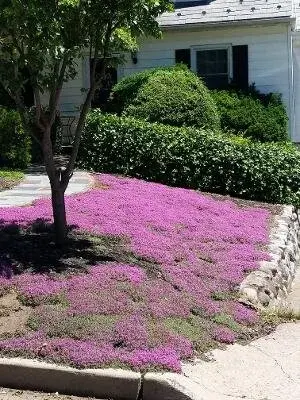
Why this works: Structure plants provide a stable framework. The surrounding flowers can emerge, bloom, and fade while the overall design remains recognizable.
Common mistake to avoid: Selecting shrubs because they are small at the garden center. Check their expected mature height and width before making them permanent anchors.
Mistake #6: Everything Blooms at the Same Time
Sometimes a bed looks empty even though it has good spacing and layering because its plants peak together.
A garden filled with spring flowers can be glorious in May and nearly blank by August. A border built around late-summer perennials may look unremarkable for the first half of the growing season.
Not every plant needs to bloom for months. A plant with a shorter season can be valuable when neighboring plants conceal its fading foliage or take over the visual work afterward.

Why this works: Each plant has a season and a role. As one recedes, another becomes more prominent, preventing a large visual gap.
Common mistake to avoid: Planning with bloom color alone. Include attractive foliage, seed heads, bark, evergreen form, and fall color so the bed remains interesting between flowers.
Plant Ideas
For a sunny bed, daffodils and peonies can begin the season. Catnip and daylilies can carry the garden into summer. Coneflower and ‘Autumn Joy’ sedum can provide later color, followed by ornamental grass seed heads in fall and winter.
For shade, hellebores and brunnera can provide early interest. Astilbe and ferns fill the middle of the season. Woodland aster and toad lily add later flowers, while ferns and oakleaf hydrangea contribute enduring foliage and fall color.
Goal:
Seasonal succession that combines plants that take turns providing flowers, foliage, seed heads, or fall color.
How Garden Designers Create Full-Looking Flower Beds
Garden designers plan flower beds as a complete composition instead of choosing plants one at a time. They combine a few structural anchors with repeated groups of perennials, contrasting foliage, and a lower layer that softens exposed edges.
For example, a sunny bed might pair compact hydrangeas with repeated groups of coneflower, sedum, coreopsis, and hardy geranium. In shade, an oakleaf hydrangea could anchor groups of hostas, Japanese painted ferns, hellebores, and barrenwort.
Each plant has a purpose: structure, repetition, seasonal color, or ground coverage. Planning these roles around mature plant sizes creates fullness without overcrowding.
Sometimes the Layout Matters More Than the Plants
When a flower bed looks sparse, buying more plants may not help. The bed might already have enough plants but lack repetition, layering, or a strong structure.
Before shopping, identify the missing role. Rearrange existing plants into clearer groups, divide successful perennials to repeat them elsewhere, and add new plants only where a genuine gap remains.
You do not need to finish the garden in one season. A thoughtful long-term layout lets the layers gradually meet, reduces unnecessary purchases, and creates a bed that becomes fuller and easier to maintain over time.
Give Every Plant a Purpose
If your flower bed is full of plants but still looks unfinished, you may not need more plants. You may need a clearer plan for how they should work together.
A personalized Signature Garden Plan can help you see where structure, repetition, layering, or seasonal interest is missing. Your plan is tailored to your climate, sunlight, garden goals, and preferred level of maintenance, giving you practical recommendations and clear next steps.
Avoid spending another season—and another garden-center budget—on plants that do not solve the underlying problem. Create a flower bed that becomes fuller, easier to maintain, and more beautiful as it matures.